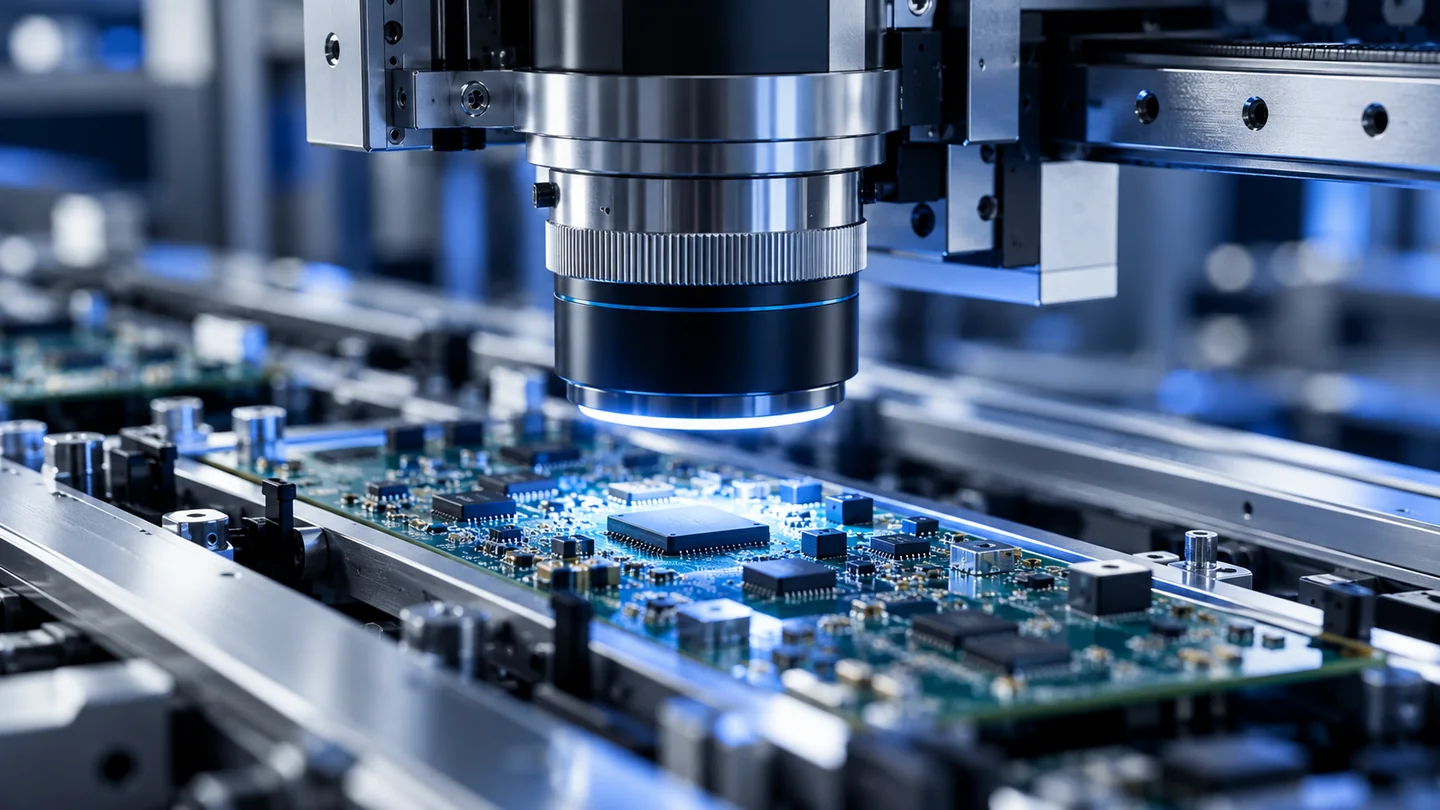
Computer vision & visual inspection

Make Visual Information
Useful to Operations.

Explore image classification, product-photo checks and visual inspection through a feasibility-led pilot using representative business images.

THE BUSINESS CONTEXT

Start with
What Matters.

Photographs and video can contain information that teams currently inspect manually: a missing label, an inconsistent product image or a visible defect. Computer vision may help organise that review when the target is well defined and the input conditions are understood.

We begin with a data and feasibility assessment. The quality of images, the range of conditions and the consequences of a missed detection determine the approach. A result on a few demonstration images is not enough to establish production reliability.

YOUR FIRST ENGAGEMENT

A Useful
Starting Point.

Feasibility-Led Engagement

Evaluate one visual classification or inspection task on an approved, representative image set.

Discuss This Pilot

What We Need from You

Permitted images, reliable labels, a domain expert and a defined error tolerance.

What We Can Measure

  • Precision and recall
  • False alarms by condition
  • Review time
  • Processing latency

Measures are agreed for your project. Results depend on the data, workflow and evaluation; they are not guaranteed improvements.

WHAT WE DO

The Detail Behind
the Capability.

01

Define What Should Be Detected

Agree categories, annotations and acceptable errors with a domain expert. Collect permitted examples across lighting, camera position, product variation and difficult cases. Check whether there are enough representative negative examples. Unclear definitions and inconsistent labels need to be resolved before meaningful model evaluation.

02

Build a Reviewable Prototype

Evaluate appropriate image models or existing services against the agreed task. Show labels, locations or comparison results alongside the original image. Preserve uncertain cases for review. The prototype can begin with uploaded images before considering live camera or production-line integration.

03

Test on Realistic Conditions

Use held-out images that were not used in configuration or training. Report missed detections, false alarms and performance across relevant conditions. Test changes in packaging, camera quality and lighting. A quality-inspection deployment needs the process owner to decide what error level is acceptable.

04

Plan Integration and Human Control

Define where images are processed, how long they are retained and who reviews exceptions. Physical actuators, safety-critical decisions and biometric identification are outside the standard pilot. Specialist hardware and domain engineering may be required for real-time industrial use and are scoped after feasibility.

A DEFINED ENGAGEMENT

Know What
You’re Building.

Your proposal defines the exact scope, responsibilities, milestones, and exclusions. Depending on the engagement, the work can include:

  • Image-data and task feasibility report
  • Annotation and evaluation specification
  • Visual analysis prototype
  • False-positive and false-negative analysis
  • Reviewer interface or API output
  • Production dependency and cost assessment

WHERE IT FITS

Built Around a Useful Task.

E-Commerce Teams

Check product-photo completeness and visual consistency.

Manufacturing Teams

Explore a clearly defined defect-inspection task.

Operations Teams

Classify permitted visual records for staff review.

Understand Our Delivery Approach

WHO THIS CAN HELP

Find Your Industry Context.

Explore example workflows and the customer groups these services are designed to support.

All Industries & Client Types

A PRACTICAL FIRST STEP

Learn from a Focused Pilot.

Choose one useful task, agree how the result will be checked, and use the evidence to decide what should happen next.

Read the AI Pilot Guide

QUESTIONS, ANSWERED

A Few Useful Answers.

Can you guarantee defect detection?

No. A pilot measures detection performance on representative data and reports the failure cases. Deployment depends on whether the observed performance fits the operational risk.

Do we need special cameras?

It depends on the task. We assess existing images first, then identify lighting or hardware requirements if the use case needs them.

Does this include facial recognition?

No. Biometric identification and safety-critical control are outside this standard offer.

A CONVERSATION IS A GOOD PLACE TO START

Your Next Chapter.
Let’s Build It.

Talk to Plateau