
API integration & workflow automation

Connected Systems.
Less Repetitive Work.

Connect the tools your business already uses and define how information moves between them. Plateau develops API integrations and workflow automation with clear rules for validation, exceptions, and operational ownership.

THE BUSINESS CONTEXT

Start with
What Matters.

Teams often repeat the same information across email, spreadsheets, customer systems, and operational applications. An integration can help when the relationship between those records is understood. Automation becomes useful when there is a defined trigger, a known action, and a clear way to deal with failure.

We begin by mapping the current workflow and the systems involved. Some steps belong in an API integration, some need a better user interface, and others should continue to require a person's decision.

WHAT WE DO

The Detail Behind
the Capability.

01

Map the Information Before Connecting the Tools

A shared field name does not always mean shared meaning. Customer identities, product codes, dates, units, and status values can differ between applications. We define the source of truth, the mapping, the direction of updates, and the rules for resolving conflicts. This helps avoid moving inconsistent information faster while leaving the underlying problem unresolved.

02

Design for Retries and Exceptions

External systems are not always available. A reliable workflow needs to recognise unsuccessful requests, prevent unintended duplicate actions, and make exceptions visible. Depending on the project, that can involve queues, retry rules, idempotent operations, reconciliation reports, or a review inbox. Your team should know which actions completed, which need attention, and who is responsible for the next step.

03

Automate Within a Defined Business Policy

Useful workflows can cover enquiry routing, record updates, document preparation, order notifications, or approval reminders. We specify which actions may happen automatically and which need review. Sensitive permissions and credentials belong in controlled server-side configuration. Sending messages or changing commercial records should follow the rules agreed for the engagement.

04

Add AI Where Interpretation Is Needed

Rules-based automation is a good fit for predictable inputs and actions. AI can help when a step involves summarising, classifying, extracting information, or preparing a draft from varied text. These outputs need validation appropriate to their use. Our AI services explore this extra layer while preserving the transaction rules and access controls of the underlying workflow.

A DEFINED ENGAGEMENT

Know What
You’re Building.

Your proposal defines the exact scope, responsibilities, milestones, and exclusions. Depending on the engagement, the work can include:

  • Workflow map and integration requirements
  • Data-field mapping and source-of-truth decisions
  • API or event-based integration implementation
  • Validation, retry, and duplicate-handling rules
  • Exception visibility and operational handover
  • Documented access requirements and maintenance scope

WHERE IT FITS

Built Around a Useful Task.

Enquiry Operations

Route approved leads and prepare the next action in the right system.

Commerce Operations

Exchange product, customer, order, and fulfilment information.

Internal Workflows

Reduce repeated administration across business applications.

Understand Our Delivery Approach

SELECTED WORK

A Closer Look
at Related Projects.

Explore the platforms and brand experiences in our portfolio, from business operations to communities and digital commerce.

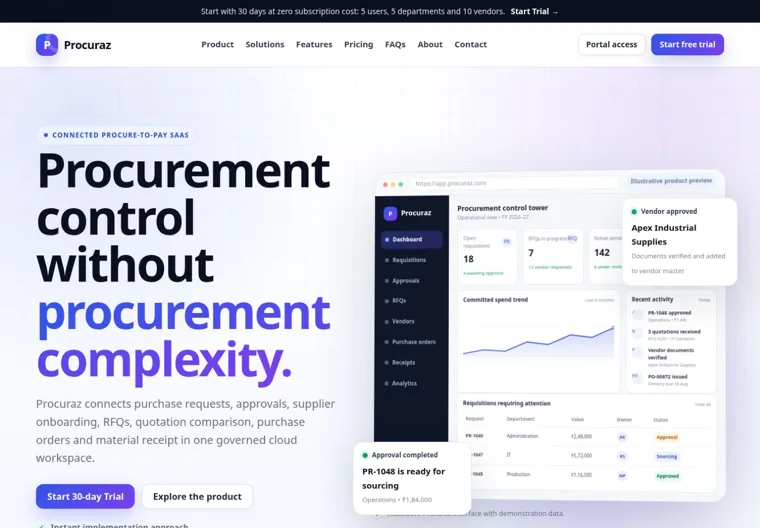
procuraz.comWEBSITE PREVIEW
Procuraz website homepage screenshot

Business software

Procuraz

A procurement platform bringing purchase requests, approvals, supplier interaction, RFQs, quotations, orders, and receipts into a coherent business journey.

forestclay.comWEBSITE PREVIEW
Forest Clay website homepage screenshot

Digital commerce

Forest Clay

A brand-led e-commerce experience for essential oils, botanical blends, and home fragrance, combining product discovery with considered editorial presentation.

Explore the Full Portfolio

QUESTIONS, ANSWERED

A Few Useful Answers.

Does every system need an API?

A supported API is often the preferred route. Other options depend on the system and may include documented exports, imports, or approved integration features. We assess the available access instead of assuming every application can be connected.

Can an automation run without someone watching it?

Defined steps can run on a schedule or in response to an event once deployed. The workflow still needs monitoring, error handling, ownership, and clear boundaries for actions requiring review.

How do you avoid duplicate records or messages?

We define unique identifiers and duplicate-handling behaviour as part of the integration. The appropriate technique depends on the target systems and their capabilities. Retries should be designed so they do not unintentionally repeat a business action.

Can you connect our website to a CRM?

Yes, subject to the CRM's supported access and your account permissions. We map the enquiry fields, consent or contact rules, ownership, and follow-up status so the handover is useful.

What is needed to scope an integration?

Provide the system names, the records to exchange, a sample workflow, expected volumes, and the desired timing. Documentation and test access help establish the technical requirements.

A CONVERSATION IS A GOOD PLACE TO START

Your Next Chapter.
Let’s Build It.

Talk to Plateau